


Why Diabetics Lose Teeth Faster & And How Full Mouth Dental Implants Can Still Save Your Smile
If you have diabetes, you already know the demands it places on your body. But there is one consequence most doctors never mention in the consultation room: diabetes is silently destroying your teeth. Millions of diabetic patients across the world from the US and UK to Canada and Australia are losing teeth at an alarming rate, and most don’t realise it until significant damage is done. This guide explains exactly why it happens, what the science says, and why patients are increasingly choosing full mouth dental implants in India.
Table of Contents
- The Diabetes–Tooth Loss Connection
- The Vicious Cycle: How Each Condition Worsens the Other
- Why Traditional Implants Often Fail Diabetic Patients
- Basal Implants: The Solution Designed for Cases Like Yours
- Full Mouth Reconstruction Cost in India vs the West
- Practical Tips for Diabetic Patients Right Now
- FAQ: Your Top Questions Answered
1
The Diabetes–Tooth Loss Connection
Nearly 589 million adults worldwide live with diabetes and an estimated 252 million don’t even know it yet. While most patients focus on managing blood sugar, diet, and medication, their oral health is quietly deteriorating in the background. The relationship between diabetes and tooth loss is biological, bidirectional, and well-documented in clinical research.
High blood glucose weakens the body’s immune response, making it harder to fight off the bacteria that constantly colonise your mouth. Over time, this leads to gum infections (periodontitis), bone loss around the teeth, and eventually tooth loss. What makes this particularly devastating for diabetic patients is that the damage accelerates faster, heals slower, and is often more severe than in non-diabetic patients with the same level of dental neglect.
The Key Biological Mechanisms
- ①Elevated glucose in saliva feeds harmful oral bacteria, accelerating plaque and tartar formation
- ②Weakened immune response allows infections to establish and spread in gum tissue unchecked
- ③Dry Mouth — caused by diabetic medications and neuropathy; reduces saliva, your mouth’s natural defence against bacterial buildup
- ④Impaired healing means gum infections and surgical wounds recover far more slowly, allowing damage to compound
- ⑤Accelerated bone resorption — diabetics lose jawbone density faster once teeth are missing, narrowing the window for implant treatment
2
The Vicious Cycle: How Each Condition Worsens the Other
What makes this problem so dangerous is that it is bidirectional: diabetes worsens gum disease, and gum disease worsens diabetes. This is not a one-way relationship. Research published by the International Diabetes Federation confirms that chronic periodontitis triggers systemic inflammation that directly impairs insulin sensitivity, pushing blood sugar levels higher even when medication is correctly managed.
| Diabetes Does This to Your Mouth | Your Mouth Does This Back to Your Diabetes |
|---|---|
| High glucose feeds oral bacteria → gum infection | Gum inflammation raises HbA1c → harder to control blood sugar |
| Weakened immunity → periodontitis advances faster | Chronic oral infection → increased insulin resistance |
| Impaired healing → gum damage worsens after each episode | Tooth loss → soft food diet → blood sugar spikes |
| Dry mouth → decay and bone loss accelerate | Jawbone deterioration → further tooth loss → cycle continues |
The 2026 American Diabetes Association Standards of Care now formally recognises this oral-systemic link and recommends that diabetic patients work with a dental specialist as part of their overall disease management. Treating your mouth is no longer just cosmetic. For a diabetic patient, it is part of managing the disease itself.
3
Why Traditional Implants Often Fail Diabetic Patients
Once teeth are lost, the natural solution is dental implants. But this is where most diabetic patients run into a frustrating wall and are told the words no patient wants to hear: “You’re not a candidate.”
Conventional root-form implants were not designed with compromised patients in mind. They depend on a sequence of conditions that diabetes often undermines:
- ✗Sufficient alveolar bone volume — which diabetics typically lack due to accelerated bone resorption after tooth loss
- ✗Bone grafting — a secondary surgical procedure that carries high failure risk in diabetic patients due to impaired healing
- ✗4–6 months of osseointegration — a long healing window where the implant fuses to bone; diabetic patients have significantly lower success rates during this phase
- ✗Strictly controlled HbA1c levels — many clinics set rigid thresholds and reject patients whose diabetes is not perfectly stable
Being rejected for conventional implants does not mean implants are impossible. It means conventional implants are not the right tool for your situation. There is a fundamentally different approach and patients from the US, UK, Canada, and Europe are travelling to our clinic in Hyderabad, India specifically because of it.
4
Basal Implants: The Solution Designed for Cases Like Yours
What Makes Basal Implants Different
Basal implants — also known as cortical implants anchor into the cortical (basal) bone of the jaw, not the alveolar bone that conventional implants rely on. This distinction is everything. Cortical bone is the deepest, densest, most structurally stable layer of the jaw. It is largely unaffected by gum disease, tooth loss, or the bone resorption that diabetes accelerates in the upper layers.
Because basal implants for gum disease and bone loss patients bypass the compromised alveolar layer entirely, the conditions that disqualify a patient from conventional implants — thin bone, previous bone loss, diabetic healing concerns, simply do not apply in the same way.
Why Basal Implants Work for Diabetic Patients
- ✓No bone graft required — eliminates the highest-risk surgical step for diabetic patients entirely
- ✓Immediate loading — teeth are placed within 3 days of implant surgery; no months-long healing wait
- ✓Flapless, minimally invasive procedure — less surgical trauma means reduced healing demands on the body
- ✓Anchors in cortical bone — which has superior blood supply and is far less affected by diabetic bone changes
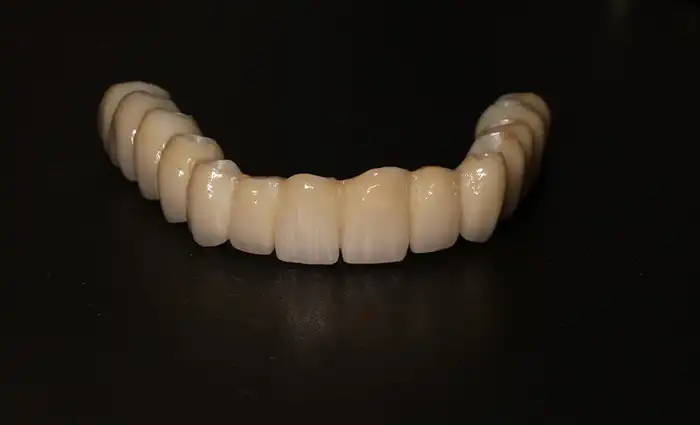
- ✓Monolith zirconia bridge — metal-free, non-chipping, and bacteria-resistant; ideal for patients with compromised immunity
- ✓Suitable for all patients — at our Hyderabad clinic, ALL patients needing implant restoration are evaluated as candidates, including diabetics who have been turned away elsewhere
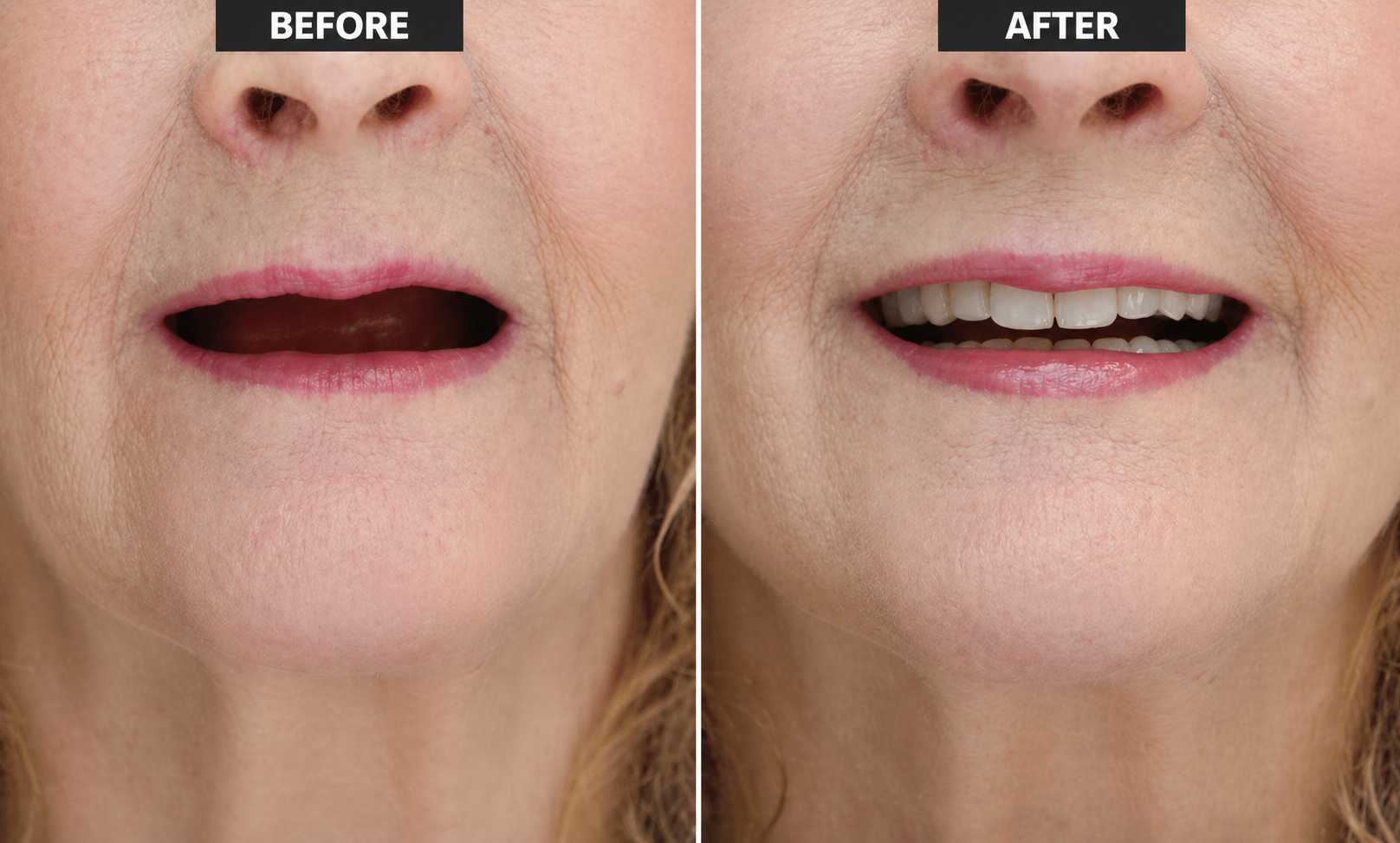
Overseas patients choosing full mouth dental implants abroad at our Hyderabad clinic frequently share one thing in common: they were told by their local dentist that implants were not an option for them. Read the real patient success stories to see how many of those patients now have a complete, permanent smile.
5
Full Mouth Reconstruction Cost in India vs the West
For diabetic patients who require full arch rehabilitation often 10 to 12 implants and a complete zirconia bridge, the cost in Western countries can be financially prohibitive. This is one of the most powerful reasons why patients choose full mouth dental implants overseas, specifically at our clinic in Hyderabad, India.
See the full mouth reconstruction cost in India for a complete breakdown. Here is a high-level comparison of what patients typically pay:
| Treatment | Dr. Motiwala, Hyderabad | USA | UK | Australia |
|---|---|---|---|---|
| Full Mouth (Smile in 3 Days™) | from $7,800 | $48,000+ | £35,000+ | AUD $55,000+ |
| Full Mouth (All-on-4) | from $6,400 | $24,300+ | £18,000+ | AUD $28,000+ |
| Bone Grafting | Not required | $750–$3,000/arch | £1,000–£2,500 | AUD $1,500–$4,000 |
| Initial Consultation | Free | $100–$200 | £80–£150 | AUD $150–$250 |
Note: Costs are indicative. See our detailed cost comparison page for a full country-by-country breakdown. The above does not include travel and accommodation, which for most international patients remains a fraction of what they save on treatment.
Patients choosing full mouth dental implants abroad in Hyderabad at our clinic typically save between $20,000 and $40,000 compared to equivalent treatment at home — even after factoring in flights and a two-week stay. For diabetic patients requiring a full arch reconstruction, the savings from eliminating bone grafts alone can run into thousands of dollars. See the affordable basal implants page for a detailed savings breakdown.
6
Practical Tips for Diabetic Patients Right Now
Whether you are ready for implants or not, these steps will meaningfully slow the progression of oral damage caused by diabetes:
- ✓Visit your dentist every 3–4 months — not just twice a year. Diabetic patients need more frequent monitoring than the standard recommended schedule
- ✓Share your HbA1c with your dentist — it directly affects your treatment plan, surgical eligibility, and healing prognosis
- ✓Combat dry mouth actively — stay well hydrated, avoid alcohol-based mouthwashes, and speak to your physician about saliva substitutes if needed
- ✓Do not delay tooth replacement — every month of missing teeth accelerates jawbone loss, compounds dietary restriction, and worsens blood sugar control
- ✓Ask specifically about basal implants — if you have been refused conventional implants, request a second opinion focused on cortical bone options before accepting tooth loss as permanent
→ Book a Free Consultation at Our Hyderabad Clinic
7
FAQ: Your Top Questions Answered
Can diabetics get dental implants?
Yes — but the type of implant matters enormously. Conventional implants carry higher failure rates in diabetic patients due to impaired healing and bone loss. Basal implants, which anchor in cortical bone and require no bone grafting, are significantly better suited to diabetic patients and are the preferred approach at our Hyderabad clinic.
Why do diabetics lose teeth faster than other people?
Diabetes impairs immune response, reduces saliva production, elevates oral glucose levels, and slows healing, all of which accelerate the progression of gum disease and bone loss. Studies show that people with diabetes are up to three times more likely to develop periodontitis and subsequent tooth loss compared to non-diabetic individuals.
What is the full mouth reconstruction cost in India?
At Dr. Motiwala’s clinic in Hyderabad, full mouth reconstruction using the Smile in 3 Days™ protocol starts from $7,800 compared to $48,000 or more in the United States. View the complete full mouth reconstruction cost in India page for a detailed treatment-by-treatment breakdown including zirconia bridge options.
Is it safe to get full mouth dental implants abroad in India?
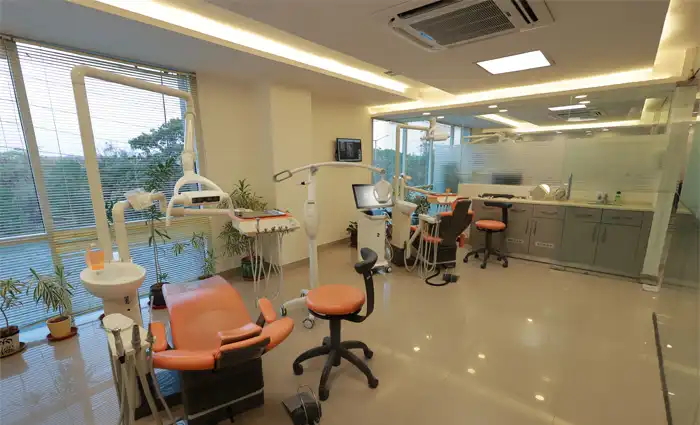
Yes. Dr. Irfan Motiwala is an Oral and Maxillofacial Surgeon with an MDS from the USA and decades of experience in advanced implantology. The clinic operates an in-house dental laboratory, uses internationally certified zirconia materials, and has successfully treated thousands of overseas patients from the US, UK, Canada, Germany, Australia, and the Middle East. Patient testimonials and verified reviews are available across the website and YouTube channel.
How long do I need to stay in Hyderabad for full mouth implants?
Most overseas patients complete their full mouth reconstruction in 5 to 7 days at our clinic. The Smile in 3 Days™ protocol places implants and loads the permanent zirconia bridge within 72 hours of surgery. Most patients allow a few additional days for review and any minor adjustments before flying home.
Does treating gum disease actually improve diabetes?
Yes — this is now supported by multiple clinical studies and acknowledged in the 2026 ADA Standards of Care. Periodontal treatment has been shown to produce a modest but meaningful reduction in HbA1c levels. This means that improving your oral health is not just good for your mouth — it contributes to better overall diabetes management.
I was told I need a bone graft before implants. Is that still true?
Only for conventional implants. Basal implants are a minimally invasive alternative to bone grafts — they are specifically engineered to work in patients with insufficient alveolar bone by anchoring in the deeper cortical bone layer instead. Patients who have been told they need a bone graft are often excellent candidates for basal implants, and are treated routinely at our clinic in Hyderabad.
Related Reading
- Basal Implants at Dr. Motiwala Dental Clinic
- Full Mouth Reconstruction Cost in India
- Full Cost Comparison: India vs USA, UK & Europe
- Patient Success Stories: Basal Implants
- Affordable Basal Implants in India — Save Up to $50K